
Home / Free stories / The Ink and the Alibi
The Ink and the Alibi
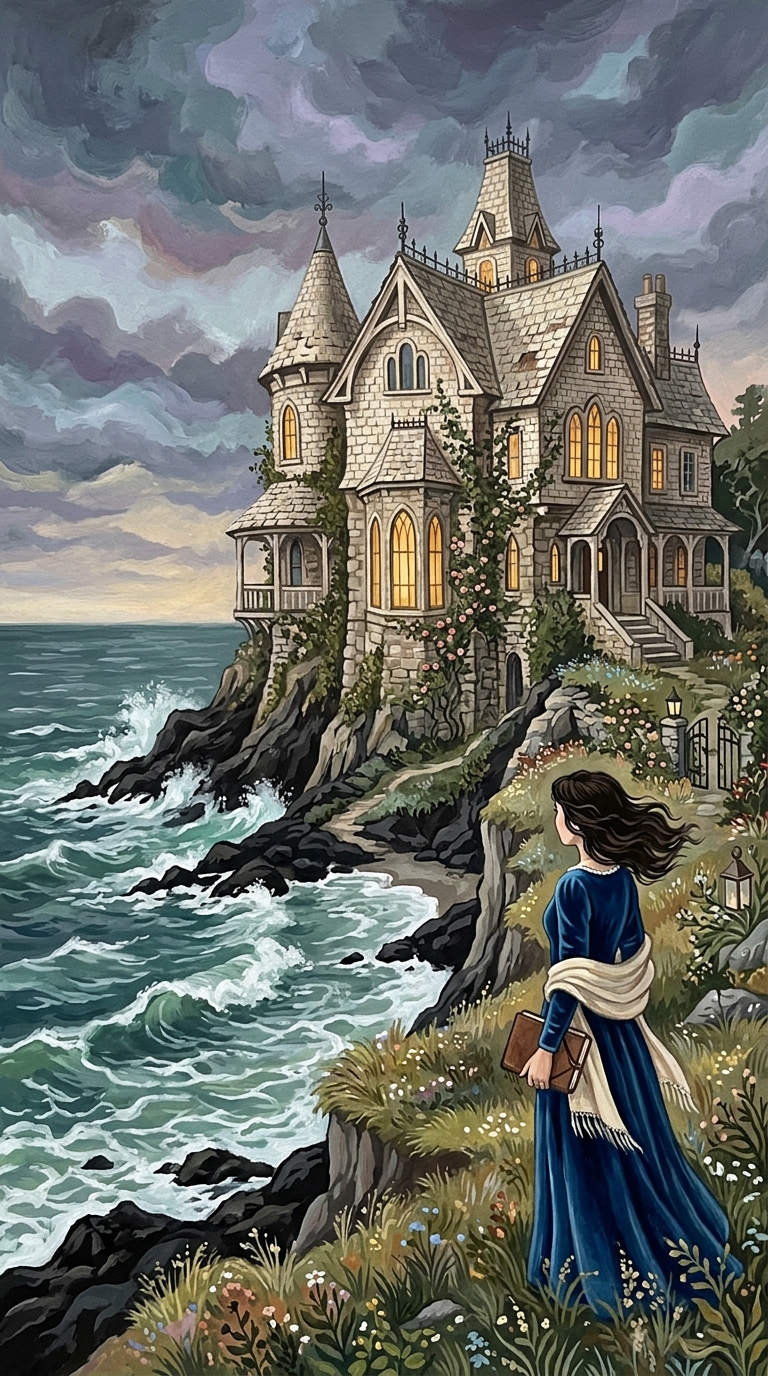
The Marinette did not just lean into the cliffside; it seemed to be actively trying to slide into the Atlantic. It was a sprawling, Victorian beast of a building, all turreted roofs and shingles that had been bleached to the color of a dried bone by decades of salt spray. Inside, it smelled of lavender floor wax and the damp, heavy breath of a storm that had been brewing since the previous Tuesday. For Lina, it was perfect. Or, it was supposed to be. At thirty-two, she had managed to convince the literary world that she was a voice of a generation, but at this exact moment, that voice was currently screaming into a metaphorical void. Her third novel, a psychological thriller that her publisher was already advertising on the side of London buses, was missing its final chapter. It was stuck, jammed like a rusted gear, and the deadline was sitting on her shoulder like a gargoyle.
She had chosen Room 4B because it faced the ocean, but the ocean was currently a wall of grey smudge. Instead, her view was dominated by the interior courtyard and the window directly across from hers. That was where she first saw him. He was not a vacationer; he didn't have the restless, bored energy of the few retirees who haunted the dining room. He sat at a heavy oak desk, surrounded by what looked like surgical tools and stacks of parchment that predated the invention of the lightbulb. Adrian, the concierge had mentioned his name with a sort of hushed reverence, was a restorer of antiquities. At thirty-eight, he possessed the kind of stillness that made Lina, who lived her life in a state of caffeinated franticness, feel like a hummingbird trapped in a jar.
He worked with his shirtsleeves rolled up to the elbow, revealing forearms that were lean and occasionally dusted with gold leaf or ink. He didn't use a computer. He used a magnifying glass and a tiny, precise brush. And he never closed his curtains. Every evening, as the rain lashed against the glass and Lina stared at her blinking cursor with murderous intent, she would look up and find him looking back. He didn't wave. He didn't smile with the practiced ease of a man trying to flirt. He simply watched her with a calm, terrifyingly attentive gaze. It was as if he were reading her through the glass, deciphering her blockages and her frustrations like they were faded Latin script on a palimpsest.
By the third night, the silence of the hotel was starting to feel less like a sanctuary and more like a sensory deprivation chamber. Lina needed coffee. Not the lukewarm swill from the in-room carafe, but the high-octane espresso from the vintage machine in the lobby. She threw on a cardigan, tucked her hair behind her ears, and stepped into the hallway. The floorboards groaned under her weight, a symphony of wood and history. She pressed the button for the lift, a wrought-iron cage that looked like it belonged in a silent film.
The doors creaked open, and there he was. Adrian was already inside, holding a stack of leather-bound journals. He smelled like cedarwood, old paper, and the sharp, dark aroma of a double shot of espresso. He stepped back to make room for her, his eyes catching hers in the dim light of the lift’s single, flickering bulb. Lina felt a sudden, sharp spike of electricity that had nothing to do with the hotel’s faulty wiring.
I thought you only existed in that window, she said, her voice sounding louder than she intended in the small space.
I could say the same for you, he replied. His voice was a rich baritone, the kind of sound that felt like it should be heard in a library after midnight. I began to worry you’d been defeated by the flashing cursor.
Lina felt a flush crawl up her neck. It’s a tactical retreat, not a defeat. I’m just waiting for the characters to stop being difficult.
The characters are rarely the problem, Adrian said, shifting the books in his arms. It’s usually the author’s refusal to let them do something they shouldn’t.
Before she could ask what he meant by that, the lift gave a violent shudder. There was a sound like a giant snapping a toothpick, and then, total darkness. The hum of the motor died, replaced by the heavy, rhythmic thud of the rain on the roof far above. Lina gasped, her hand instinctively reaching out for something to steady herself. She found his arm. It was solid, warm, and remarkably steady.
Don’t move, he said softly. His breath was very close to her ear, a warm ghost in the cold dark. The power grid here is as old as the furniture. It’ll reset in a moment.
Lina didn’t pull her hand away. In the thirty seconds of absolute pitch, her other senses became hyper-attuned. She could hear the slow, steady beat of his heart. She could feel the texture of his shirt under her palm. The scent of him—coffee and history—was overwhelming. The darkness felt thick, a velvet curtain that had dropped between them and the rest of the world. In those thirty seconds, the professional distance they had maintained across the courtyard evaporated.
The lights flickered back to life with a sickly yellow glow. The lift remained stationary, stuck between floors, but the emergency light provided enough clarity for her to see the expression on his face. He wasn't looking at the buttons or the ceiling. He was looking at her. His gaze was heavy, charged with a sudden, unspoken intensity.
I’ve been wanting to know how your story ends, he whispered.
The lift groaned and began to move again, but the words stayed behind, hanging in the air like smoke. Lina didn't know how to answer. She didn't even know how her story ended. When the doors opened at the lobby, he stepped out first, pausing only to give her a small, enigmatic nod. Lina stood in the lift for a long minute, her heart hammering against her ribs like a trapped bird. She forgot all about the coffee.
Back in her room, the silence was no longer empty. It was vibrating. She sat at her desk, but she didn't look at her screen. She looked across the courtyard. Adrian was back at his desk, but he wasn't working. He was sitting with a book in his lap, his eyes fixed on her window. The challenge was clear. She turned off her overhead light and lit a single candle, the flame dancing in the draft.
She heard a sound from the wall—the thin, lath-and-plaster barrier that separated her room from the suite he was using as a workshop. It was a rhythmic tapping. Three short, three long, three short. S.O.S.
Lina smiled. She walked to the wall and tapped back. Two quick raps. A question.
She heard the sound of a chair scraping against the floor, then the rustle of paper. A few seconds later, a small white rectangle appeared under her door. She picked it up. The handwriting was precise, the ink a deep, archival indigo.
The protagonist is stalling, the note read. Is she afraid of the ending, or is she afraid of what happens after the book is closed?
Lina grabbed a pen and a scrap of paper. She knelt by the door, the cool draft from the hallway chilling her skin.
She’s afraid the ending won’t live up to the tension, she wrote. Some things are better left as a series of possibilities.
She slid the note back. Within seconds, another one returned.
Possibility is just a polite word for cowardice. A good story requires a commitment to the consequences. Why is she at the hotel, Lina?
She bit her lip. She’s looking for a voice that isn’t her own.
Is she finding it?
Lina leaned her forehead against the cool wood of the door. She could hear him on the other side. He was sitting on the floor too. She could hear his breathing, a soft, steady counterpoint to the wind outside.
I’m finding a lot of things I didn't expect, she whispered.
I can’t hear you through the wood, he said, his voice muffled but undeniably there.
Lina stood up and turned the handle. The door opened six inches. The hallway was dim, lit only by the flickering wall sconces. Adrian was sitting on the carpet, his back against the opposite wall of the narrow corridor. He looked up at her, his dark hair messy, the top button of his shirt undone.
You’re breaking the rules of the game, she said, leaning against the doorframe.
I’ve always found that the most interesting chapters happen when the rules are ignored, he replied. He gestured to the space beside him. The floor is surprisingly comfortable if you stop worrying about your posture.
Lina hesitated for a heartbeat before stepping out and sliding down the wall to sit across from him. The hallway was narrow enough that their knees almost touched. The air was thick with the scent of the sea and the old, dusty soul of the Marinette.
Tell me about the books, she said. Why restore something that’s already been read?
Because a book isn't just the words inside it, Adrian said, his eyes tracing the line of her jaw. It's the coffee stains on page forty. It's the pressed flower in the middle. It's the way the spine has been broken by someone who couldn't put it down. A new book is just an idea. An old book is a life. I’m not just fixing paper; I’m preserving the evidence that someone felt something.
And what are you preserving here? she asked, her voice dropping to a low, dangerous register.
He reached out, his fingers hovering just inches from her hand on the carpet. Right now? I’m trying to preserve a moment that feels like it shouldn't exist. This hotel, this storm, the woman who stares at me from across the courtyard like I’m a riddle she can’t solve.
Lina felt the tension between them pull tight, a wire tuned to a breaking point. I’m a novelist, Adrian. I solve riddles for a living. I create them, and then I dismantle them.
Then dismantle this, he said.
He moved then, a slow, deliberate shift that brought him into her space. He didn't kiss her. Not yet. He took her hand, his thumb tracing the pulse point at her wrist. His skin was warm, slightly rough from his work, and the contact sent a jolt of pure, unadulterated heat through her. He leaned in, his forehead resting against hers.
You’re writing a thriller, he murmured. There’s always a moment of no return. The point where the protagonist steps through a door and knows her life will never be the same. Where is that point for you?
Lina closed her eyes, breathing him in. I think I passed it in the lift, she whispered.
The kiss, when it finally happened, was not fast. It was a slow-burn revelation, a deliberate exploration that tasted of salt and coffee. It was the culmination of three days of watching, of thirty seconds of darkness, and of a dozen notes slid under a door. His hand moved to the back of her neck, his fingers tangling in her hair, pulling her closer until there was no space left between them. The world outside—the deadline, the publisher, the grey Atlantic—ceased to exist. There was only the creak of the hotel and the heat of his mouth against hers.
They didn't go back to their rooms. They stayed in the hallway for a long time, talking in low voices about things that had nothing to do with books and everything to do with the strange, magnetic pull of the present. He told her about a map he’d found hidden in the binding of a ledger from 1812. She told him about the character she’d based on her grandmother, the one she was too afraid to kill off. They shared secrets like they were currency, building a bridge across the narrow corridor of the Marinette.
Eventually, the conversation drifted back to her book.
The ending, Adrian said, his voice brushing against her skin. You know what it is now, don't you?
Lina looked at him, her eyes bright in the shadows. I do. She’s not going to run. She’s going to stay and face the person she’s become. Even if it’s dangerous. Even if it doesn't have a guaranteed sequel.
Adrian smiled, a slow, devastatingly handsome look that reached his eyes. That’s a good ending, Lina.
She stood up, her legs a little shaky. I have to write it. Now. While the light is still like this.
He stood with her, catching her hand one last time. Go. I’ll be watching from the window.
Lina retreated into her room and shut the door. She didn't turn on the lights. She sat at her desk in the candlelight and began to type. The words didn't just come; they poured out of her, a torrential flood that matched the storm outside. The gear had unjammed. The story was no longer a puzzle to be solved; it was a truth to be told. She wrote through the night, her fingers flying across the keys, her eyes occasionally darting to the window across the courtyard. He was there, always there, a silhouette against the warm glow of his workshop, a silent sentinel in the dark.
As the first pale, bruised light of dawn began to bleed through the clouds, Lina typed the final period. She sat back, her shoulders aching, her eyes burning, but her heart felt lighter than it had in months. The manuscript was finished. The Forbidden Chapter was no longer forbidden; it was etched in digital ink, a testament to a night where the line between fiction and reality had blurred into something beautiful.
She closed her laptop with a soft click. The rain had stopped, leaving the world in a dripping, expectant silence. The Atlantic was no longer grey; it was a shimmering, metallic blue, waking up under the touch of the sun.
Lina stood up and walked to the window. Across the courtyard, Adrian was standing by his own glass. He looked tired, his shirt more rumpled than before, but when he saw her, he straightened. He held up a hand, palm flat against the pane. Lina did the same, the cold glass a thin barrier between their warmth.
She grabbed a thick marker and a piece of paper, writing in large, bold letters before holding it up for him to see.
IT’S DONE, the sign read.
He nodded, a look of profound pride on his face. He disappeared for a moment and returned with his own sign. It was written on the back of a piece of parchment, the ink still wet.
NOW WHAT?
Lina felt a pang of something that felt very much like fear, but a version of fear that was laced with hope. She opened her window, the cold morning air rushing in, smelling of salt and wet earth. He opened his. The courtyard between them was narrow, but the drop was steep.
Adrian? she called out, her voice cracking slightly in the morning air.
He leaned out, his elbows on the sill. I’m here, Lina.
She looked at the finished manuscript on her desk, then back at the man who had helped her find it. The question she had been avoiding all night finally fought its way to the surface. It was the question that every author fears after the final page is turned, and every lover fears when the sun comes up.
Was this only one night? she asked, her voice barely carrying across the wind.
Adrian didn't answer immediately. He looked down at the courtyard, then out at the rising sun, and finally back at her. His expression was no longer calm and attentive; it was open, vulnerable, and entirely certain.
The best books always have a sequel, Lina, he said. I’ve already started the first draft of mine. It starts with a woman in a window and a lift that stopped at exactly the right time.
Lina felt a smile break across her face, a warm, radiant thing that mirrored the dawn. She looked at her closed manuscript, then at the man across the way, and realized that for the first time in her life, she didn't want to know the ending. She just wanted to keep reading.
I think I’d like to see those notes, she said.
Then come down to the lobby, Adrian replied, his voice full of a new, bright energy. I think the coffee machine is finally warmed up.
Lina didn't hesitate. She didn't brush her hair or check her reflection. She grabbed her key card and ran for the stairs, the sound of her footsteps echoing through the old, waking halls of the Marinette, a new story beginning before the ink on the last one had even dried.
More stories
View all
The Lantern by the Sea

A Letter on the Night Train

Roses after Closing

The Alchemy of the Unspoken

The Geometry of Frost and Fire

The Syntax of Sun-Drenched Spills

The Lexicon of Longing

The Silver Thread to Westbahnhof

Photosynthesis and the Art of Social Distancing
The Architecture of a Final Breath
Buy a book
All booksOpen a book, then continue in the shop.

Verity

Quicksilver (Fae & Alchemy, 1)

Things We Never Got Over (Collector's Edition) (Knockemout Series, 1)
The Deal (TV Tie-In Edition) (Off-Campus, 1)

Ugly Love: A Novel

House of Earth and Blood: 1 (Crescent City)

The Lost Bookshop: A most charming and uplifting novel, the perfect gift for book lovers!

The Song of Achilles

Funny Story

Powerless (Collector's Edition) (Chestnut Springs, 3)

Every Summer After
