
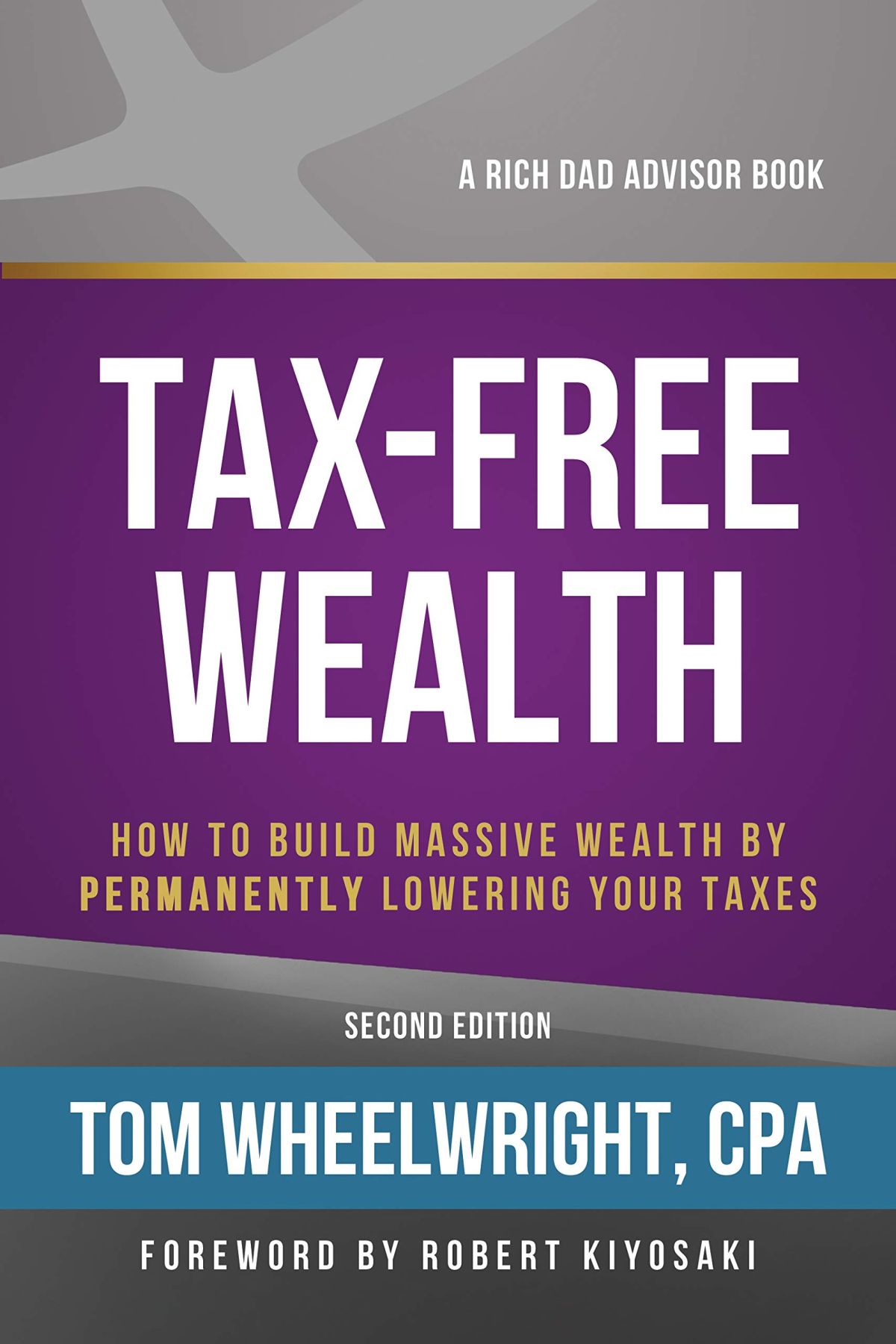
Tax-Free Wealth: How to Build Massive Wealth by Permanently Lowering Your Taxes
- Pickup from New Mail
- New Mail Courier
- Pickup from the store
- Other transport services
- Cash upon receipt
- Bank transfer
After a span of 31 years, a significant transformation has taken place in the realm of taxation – a matter that directly impacts each individual. True overhauls of the tax code are infrequent, occurring approximately once in a generation. Over the past 75 years, the United States tax law has undergone only three major restructurings: in 1954, then again in 1986, and most recently culminating at the close of 2017.
I have been fortunate to have been deeply engaged in the two most recent reform efforts as a seasoned tax professional. During 1986, my role as a manager within Ernst & Whinney's National Tax Department (now Ernst Young) afforded me the responsibility of developing, imparting, and managing tax-related courses for the firm's U.S. tax experts. It was during the summer of 1985, upon my arrival, that I became aware of the substantial focus within the department on monitoring the unfolding tax reform bill. This exposure provided me, even as a relatively young tax professional, with remarkable insights into both the legislative process and the intricate negotiations surrounding tax reform.
President Ronald Reagan held two principal aims: the pursuit of simplicity (hence, the bill's designation as the Tax Simplification Act of 1985) and the imperative of revenue neutrality (ensuring no net expansion of the deficit). However, it wasn't until a year later that the bill was eventually ratified as the Tax Reform Act of 1986. In this process, the ambition for simplicity yielded to other reform objectives. In the end, the 1986 tax reform predominantly favored individuals by substantially reducing tax rates, spared insurance companies from substantial impact, and conferred benefits upon businesses. In contrast, real estate investors bore the brunt of the reform's provisions, notably the passive loss rules that were employed as a last-ditch attempt to balance the legislation's revenue impact. The aftermath of these measures manifested in the Savings and Loan crisis, accompanied by a severe real estate downturn, subsequently necessitating government intervention through the Resolution Trust Corporation (RTC).
Fast forward three decades and one year to 2017. President Donald Trump, having promised an economic boost, had faced early setbacks, including the failure to repeal the Affordable Care Act (Obamacare). While many anticipated a two-year process akin to the 1985-1986 reform, the Republican-controlled Congress astutely employed procedural maneuvers to expedite a comprehensive tax reform within an unprecedentedly short time frame of less than three months. The outcome was a transformative bill with ramifications and applications that remained largely uncharted. Certain outcomes are clear, distinguishing the winners from the losers.
Among the casualties are employees who lost deductions for moving expenses, investment-related costs, and deductions for home mortgage interest and state income taxes. On the winning side, major corporations secured a substantial reduction in their tax rate, dropping from 35% to 21%. Small businesses also benefited, acquiring a 20% deduction from net income. Real estate enterprises enjoyed considerable depreciation incentives, alongside the 20% net income deduction granted to other small businesses.
It is imperative to recognize that the opportunity to influence this legislative process was afforded to only a select few. Nonetheless, everyone stands on equal ground to capitalize on the favorable conditions extended to the winners. Employees possess the option to transition into independent contractor status, thereby becoming eligible for the 20% small business deduction. Service professionals previously excluded from the 20% deduction can now opt for C corporation status, thereby lowering their tax rate to 21%. Investors who once enjoyed tax advantages through stock market investments can redirect their endeavors towards real estate, reaping substantial tax benefits, or opt to funnel their investments through Roth IRAs or Roth 401(k)s, thereby entirely avoiding taxation on investment income and gains.
"Tax-Free Wealth" embodies the concept of leveraging the tax code in alignment with its intended purpose – as an array of incentives that encourage actions in line with government objectives. This Second Edition incorporates new strategies for harnessing these incentives. Importantly, the core incentives remain relatively unchanged: the government continues to incentivize businesses to hire employees and investors to contribute to rental housing, now with an even greater emphasis, thereby bestowing significant tax advantages upon compliant real estate investors.
-
Rating:4.7 out of 5 stars
-
Author:Tom Wheelwright